Get Access To 25 AI Agency Niches That Are
Take the 2-minute diagnostic to unlock the full list.
AI Can Build Almost Anything Now. The Hard Part Is Knowing What Deserves To Be Built.
There has never been an easier time to start an agency.
A single operator can now use AI to research a market, build the solution, write the ads, launch the funnel, automate the fulfillment, and iterate faster than an entire team could have moved a few years ago.
Naturally, most people assume this makes it easier to win.
In one sense, it does.
But it also makes it dangerously easy to spend months building a business that never deserved to exist in the first place.
Because faster execution only becomes an advantage after you know where to aim it.
The same solution can be worth thousands in one market and almost nothing in another. The same funnel can quietly burn money in one niche and print in the next. The same operator can look brilliant when the market is carrying the weight — and completely lost when it is not.
We watched one of our clients live through both sides of that equation.
At the end of 2024, he launched an AI offer and scaled it from zero to $20,000/month in his first 30 days.
From the outside, it looked like he had cracked it.
But the early momentum was hiding a deeper problem. He had built the offer in the wrong market. The clients were not a fit. Refund requests started coming in. The money went back out almost as quickly as it had arrived.
Before long, the business had come apart.
His credit card was maxed out. He had no cash left to fund another launch. There was no comfortable runway and no pile of money waiting behind one more test.
The only opening he had left came from the way Meta billed his ad account. His billing threshold was $800 — which meant Meta would let the ads keep running until his spend reached the next threshold and the platform tried to charge his card again.
That did not mean he had $800 left to spend.
It meant he had one narrow window before Meta tried to collect money from a card that had nothing left on it. If the next offer did not work inside that window, the ads would stop running.
Most people would have responded by trying to move faster.
They would have built another funnel, tested another angle, learned another tool, or thrown a new offer into the market and hoped it worked before the clock ran out.
He did something different.
He stopped guessing.
Instead of using AI to build another idea faster, he used it to find the truth before he built anything at all.
He studied where businesses were already spending money. He looked for painful problems buyers were actively trying to solve. He found competitors already selling into those markets and reverse-engineered what they were doing: the offer, the pricing, the positioning, the ads, the funnel, and the acquisition channel bringing clients through the door.
Only after the evidence pointed to a real opportunity did he build again.
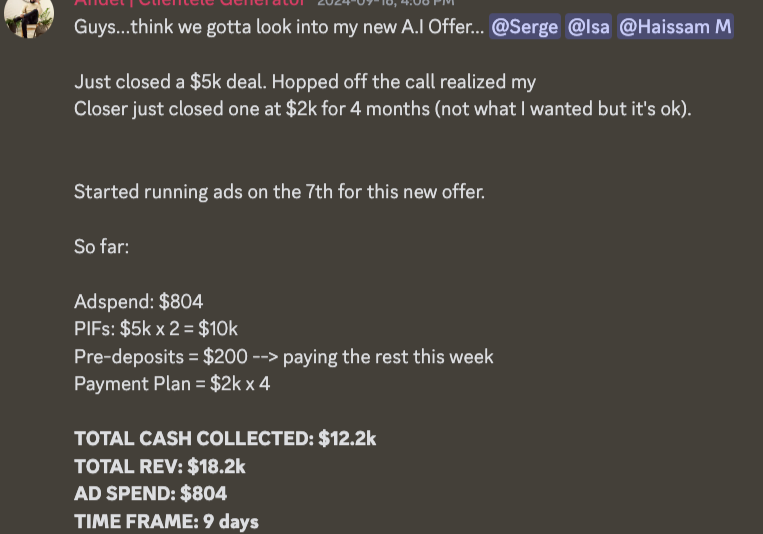
The first month came in at $16,500. The next four-week period hit $50,500.
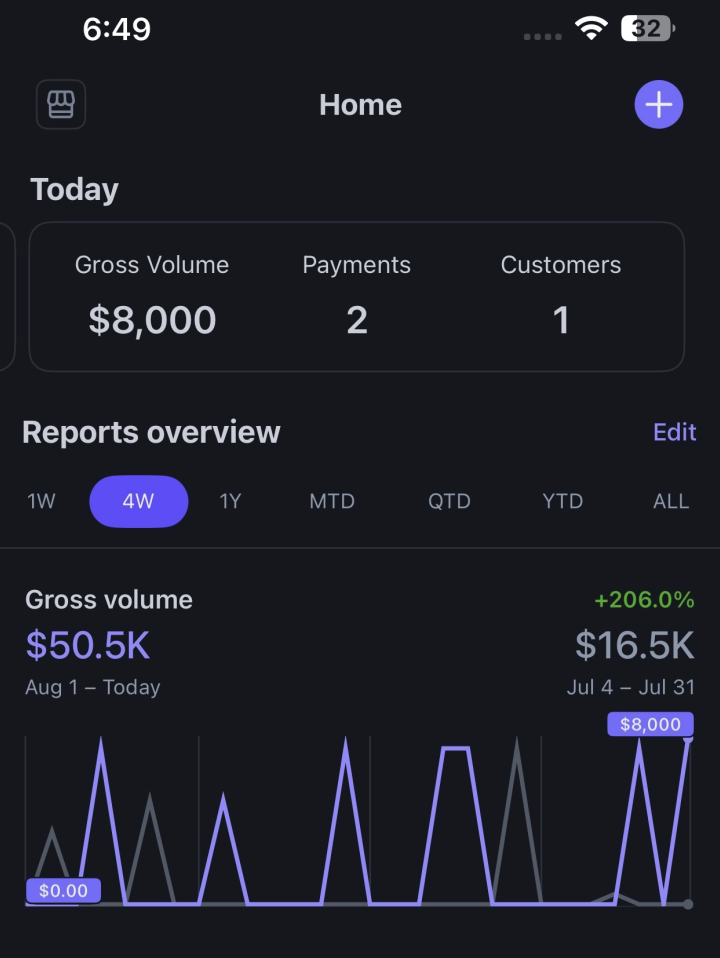
Then he sent us this message:
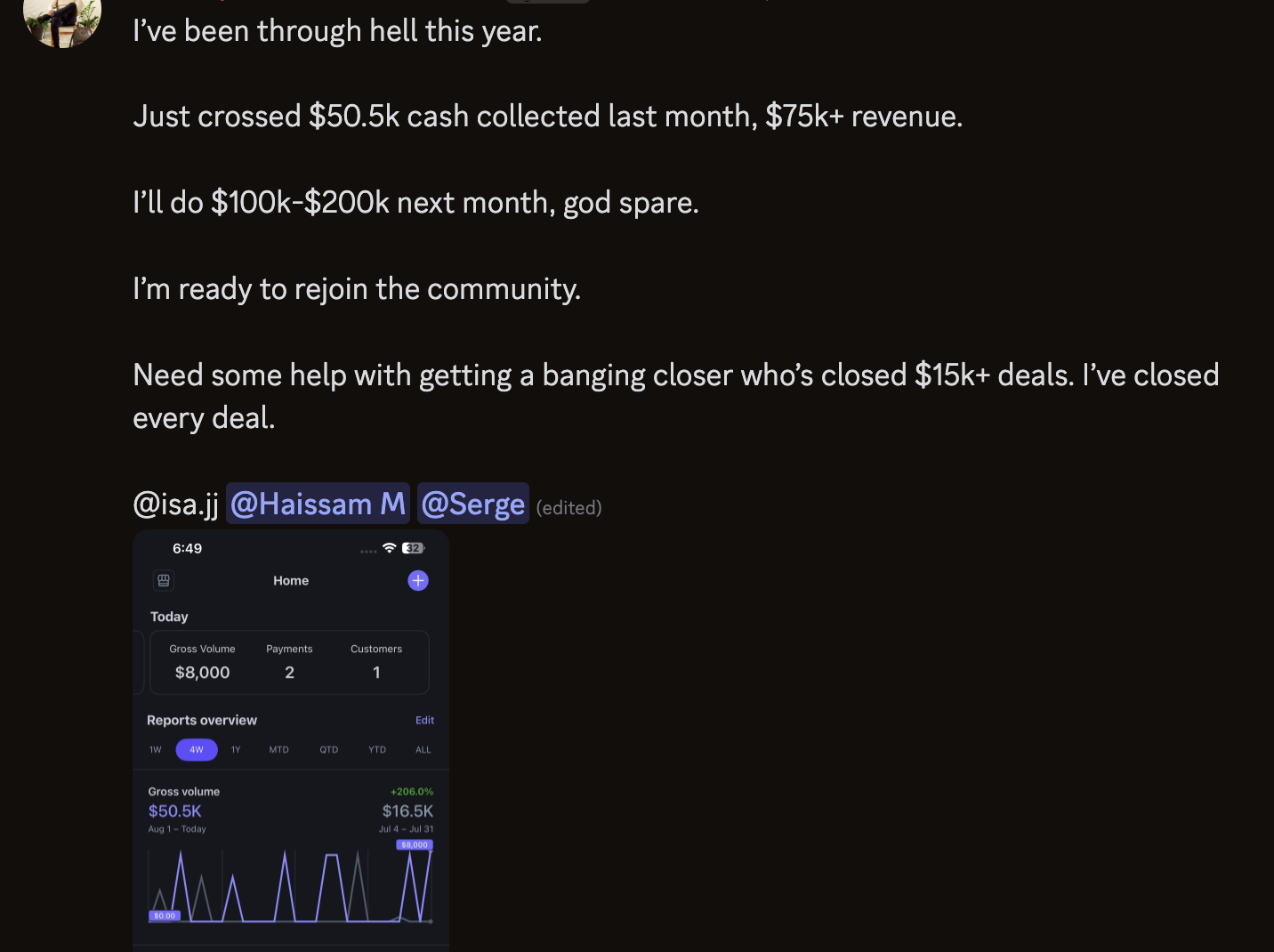
The first line is the one most operators feel. The last line is the one almost none of them get to say.
A few months earlier, he was trying to keep his ads alive before Meta attempted the next charge on a maxed-out credit card. Now he needed help finding a closer with experience selling $15,000+ deals — because he could no longer handle the sales volume alone.
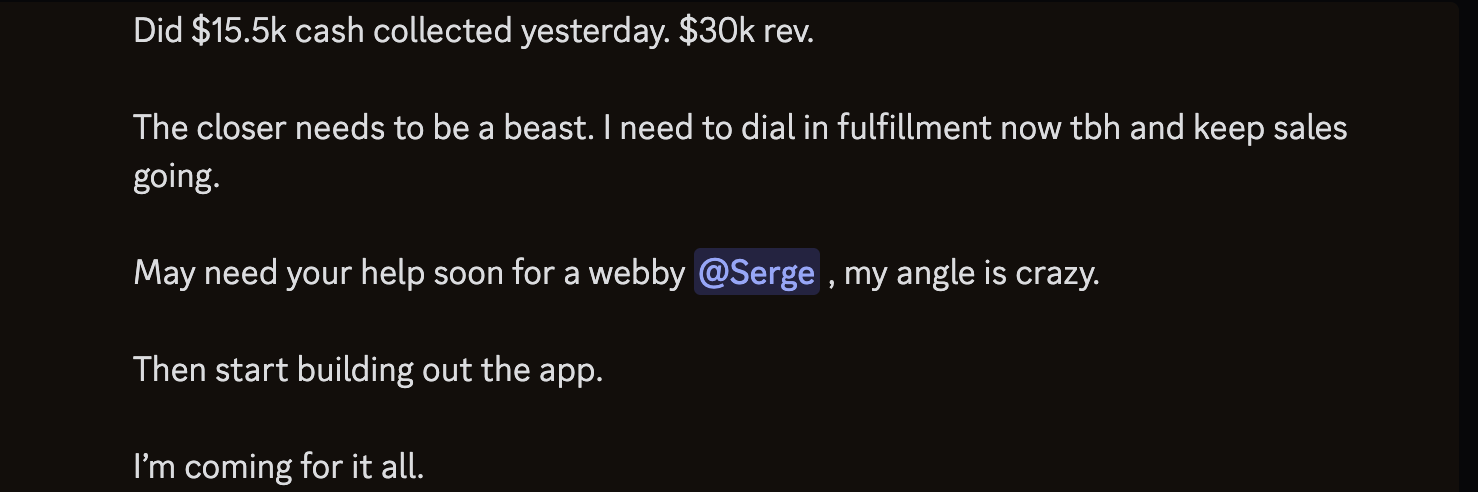
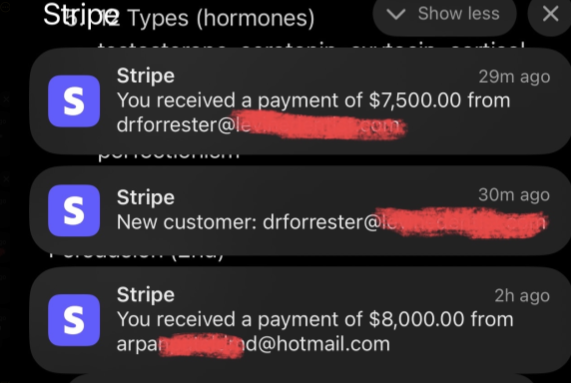
The operator had not suddenly become smarter. He had not discovered a magical new AI tool. He had simply stopped asking AI to execute his assumptions and started using it to test those assumptions against the market first.
That is the part most people miss.
As intelligence becomes abundant, intelligence stops being the advantage. The advantage becomes knowing what is true before you spend your time, your money, and your attention building around it.
- Where is money already being spent?
- Which problems are painful enough that buyers want them solved now?
- Which AI solutions are already feasible to deliver?
- Who is already selling into the market successfully?
- What offer, message, funnel, and acquisition channel are they using to do it?
Those questions are less exciting than building another agent. They are also the questions that decide whether the agent becomes a business.
So we did the research before you spend the money.
We reverse-engineered 25 AI agency niches with visible demand and agencies actively selling into them — then documented the stack behind each one: the market, the pain, the offer, the funnel, the ads, and the scripts.
This is not a generic list of industries that might need AI someday. It is a map of where agencies are already finding buyers now.
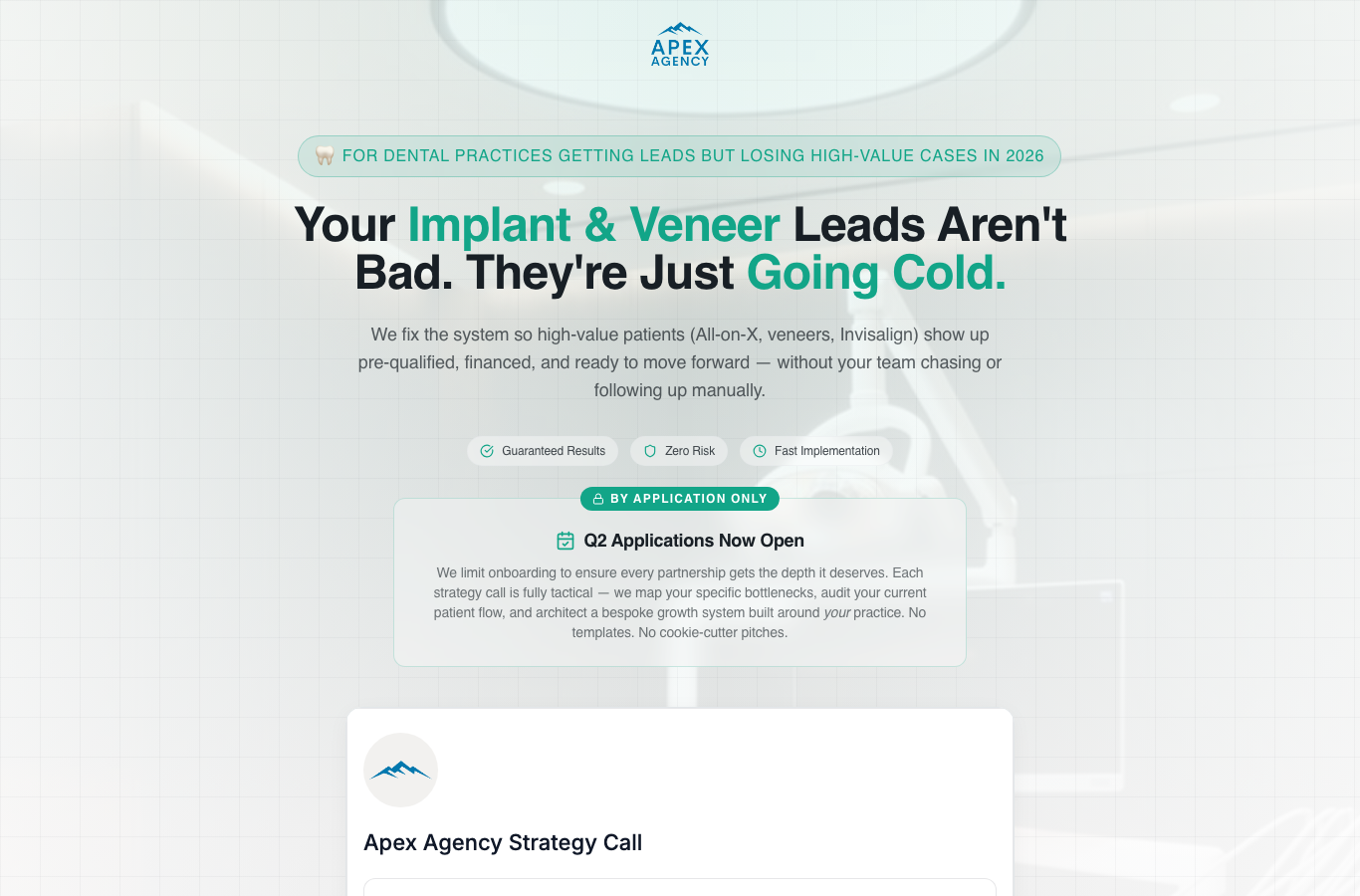
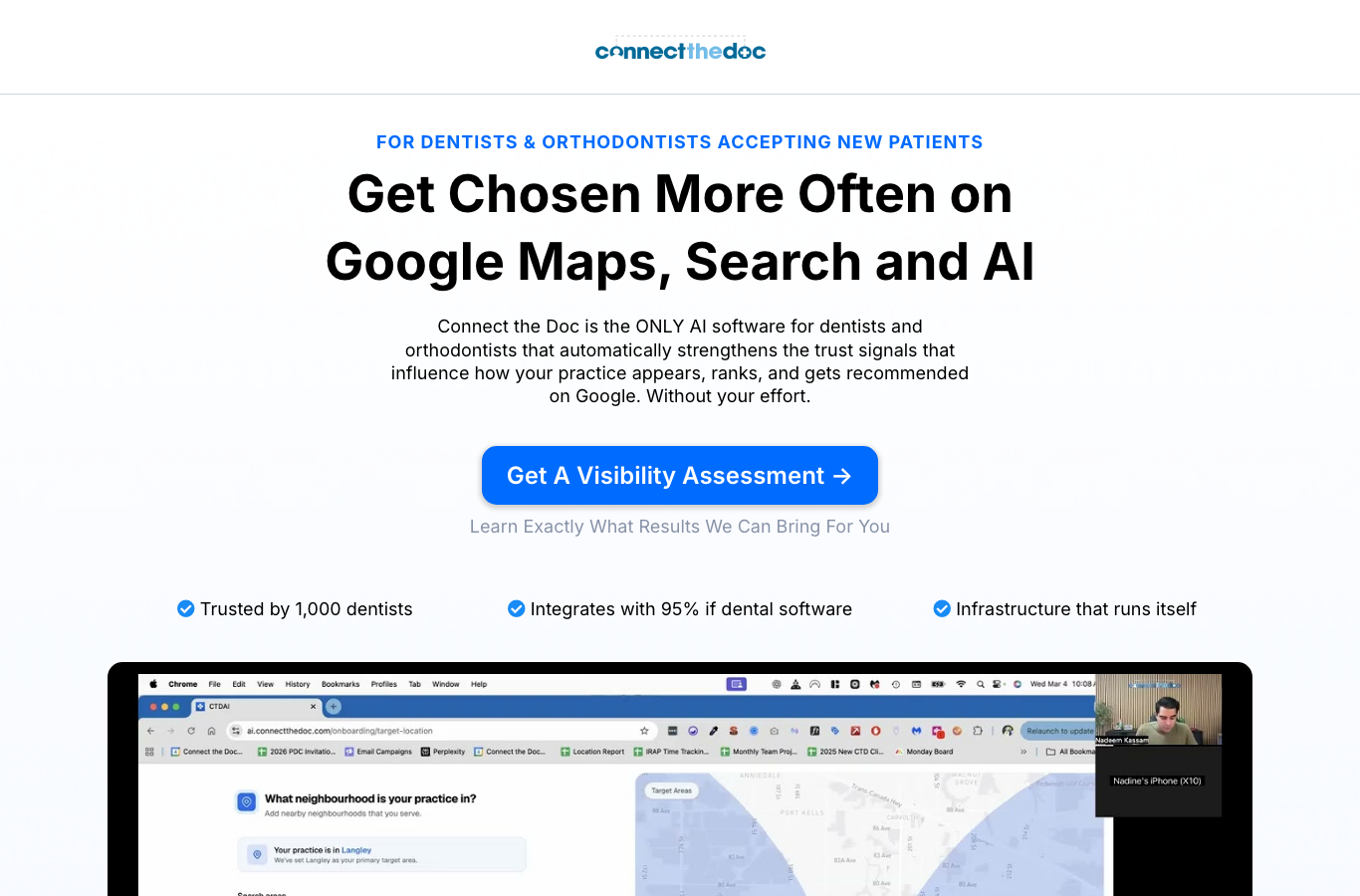
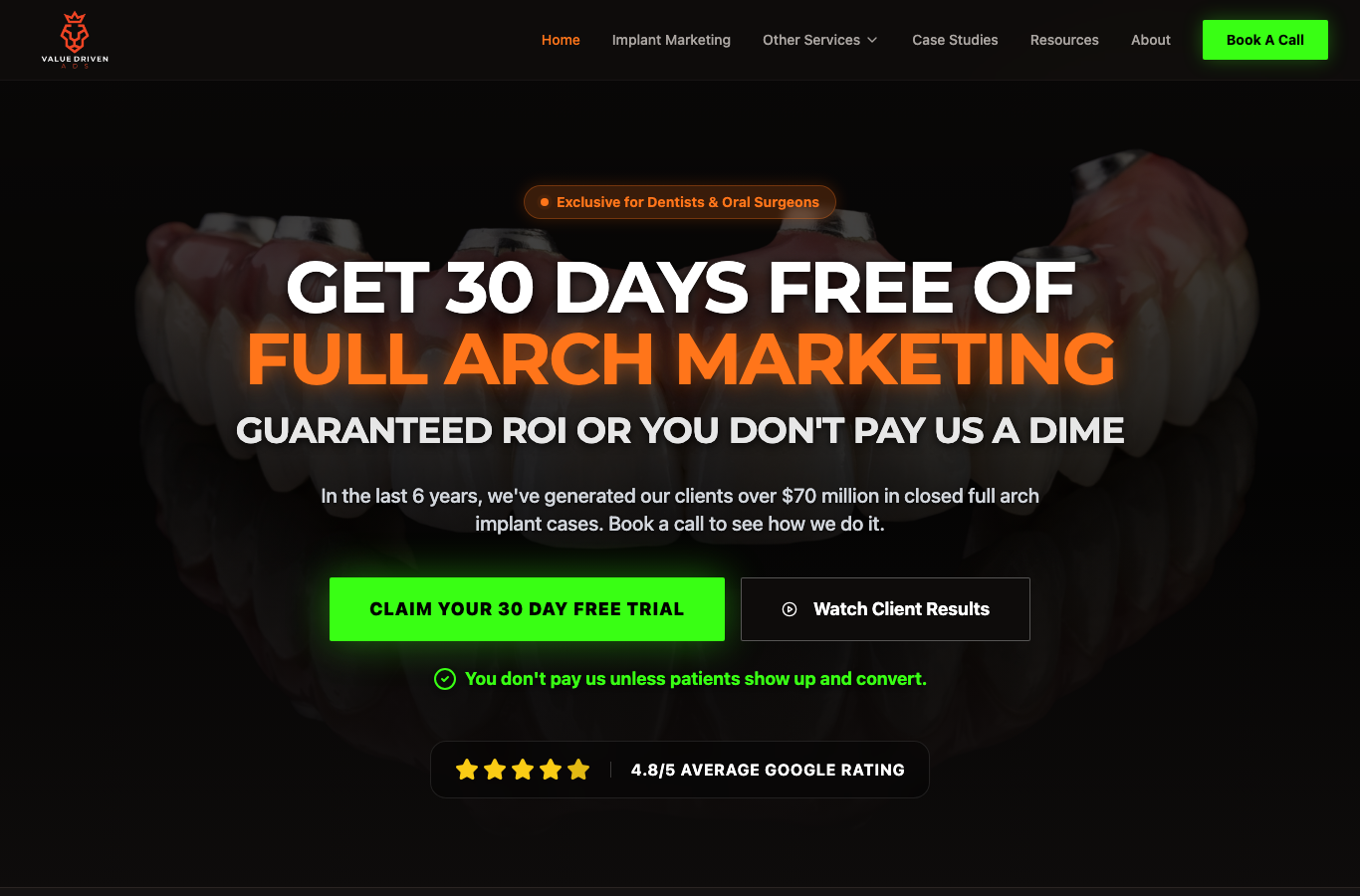
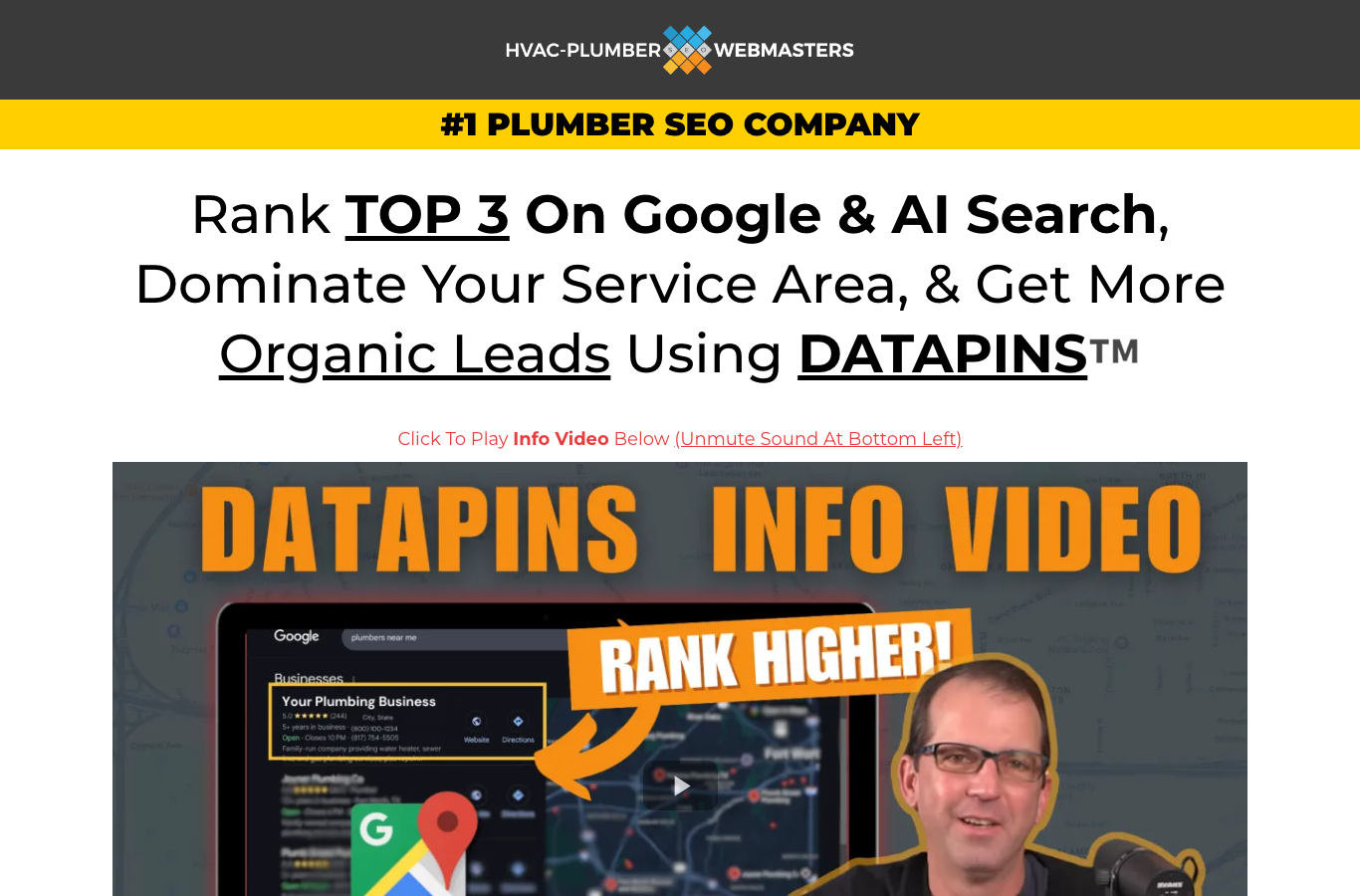
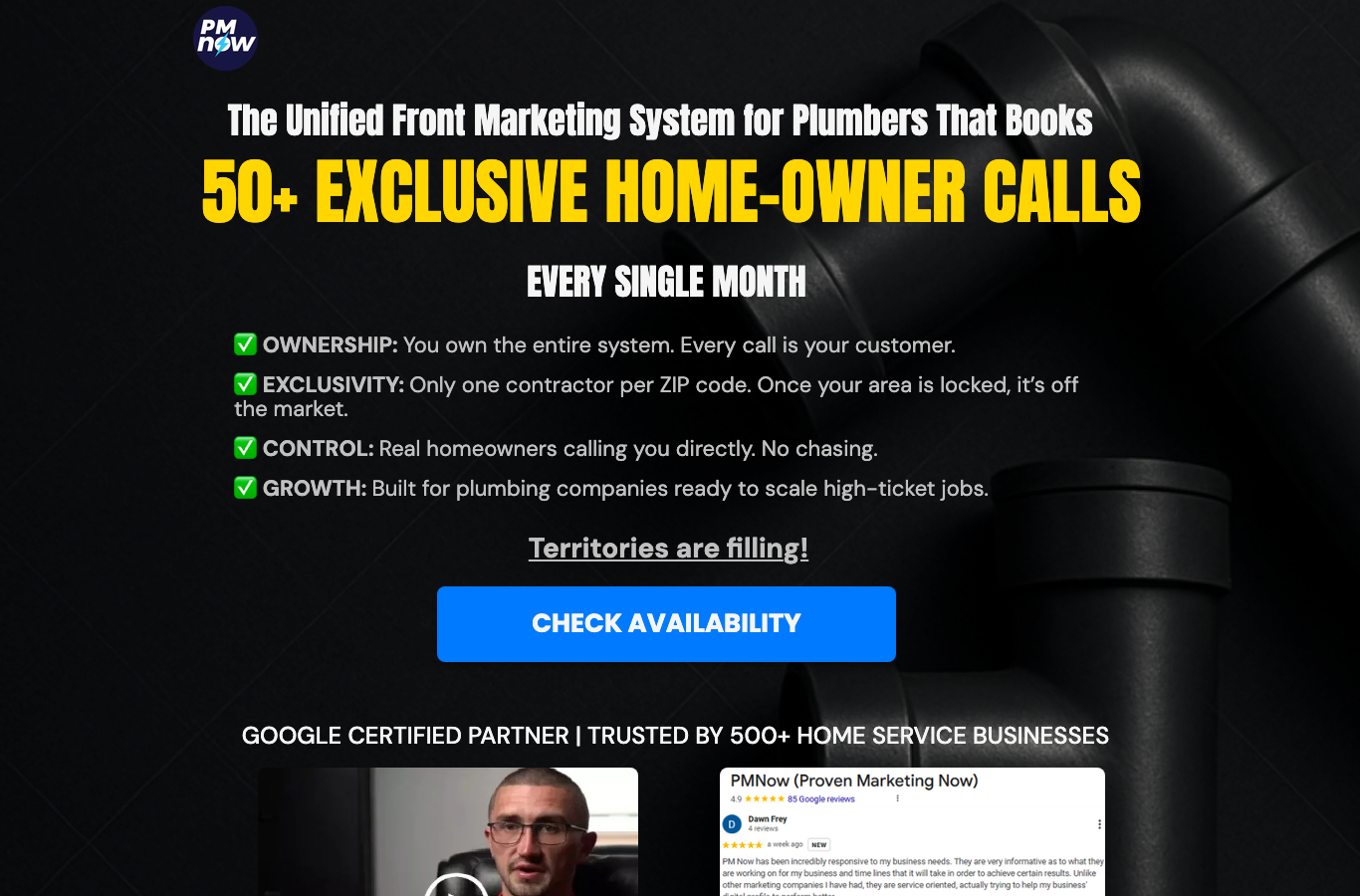
Here are two of the twenty-five — the actual landing pages and ads, pulled live:
#1 Cosmetic Dentistry
3 agencies advertising · 6 live ads
#2 Plumbers
6 agencies advertising · 34 live ads
And you don't have to build everything by hand — Cook.ai turns swarms of AI agents loose on the market truth and assembles your funnel, pages, and assets in days, not months.
Take the diagnostic. Worst case, you spend two minutes answering a few questions about your business. Best case, you stop building in the wrong market before the next few months disappear into another offer that never had a chance.

P.S.This is the same research we run internally before we touch a new vertical. Once you see how specific the opportunities become, every generic “how to start an AI agency” video begins to feel incomplete.
Get Access To The Top 25
Take the diagnostic to unlock everything
Answer a short set of questions about your business. We'll send you the full niche list, score your fit, and unlock access to the $49 clone pack.
Get the full 25 niche list